Dow Jones Futures Today: Trends & Insights
Dow Jones futures today decoded by Vestmint: clear trends, US–India market links, and simple tips for beginners to trade smarter.
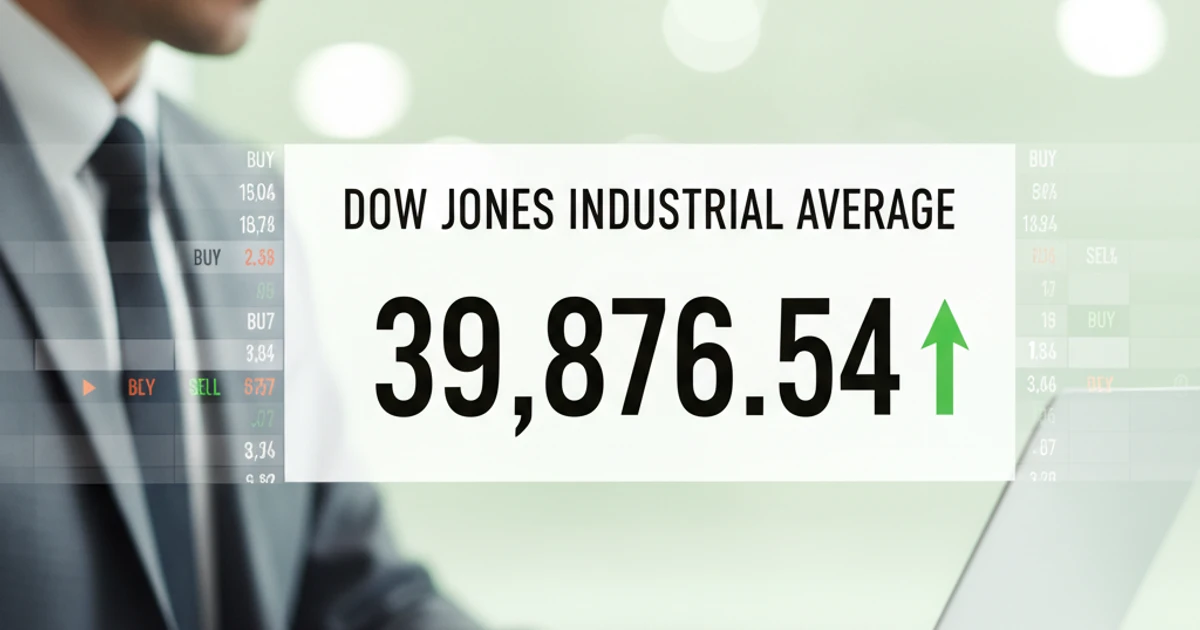
You wake up, check the headlines, and see Dow Jones futures flashing red or green—but what does that actually mean for your portfolio, or for markets back home in India? For many new and retail investors, those pre-market numbers feel mysterious, even though they quietly influence sentiment, sector moves, and intraday volatility.
By understanding how to read Dow Jones futures today, you’ll start seeing the links between U.S. and Indian market trends, interpreting global news with more clarity, and spotting trading opportunities without relying on guesswork. It takes some focus and practice, but Vestmint breaks down the concepts, from market signals and correlations to practical futures trading tips and risk control, so you can move from confusion to confident decision-making over time.
In a world where trends can shift on a dime, understanding the whispers of the Dow Jones Futures is not just savvy—it's essential for those daring to step into the volatility of today's market. Are you ready to decode the future of your investments, or will you let uncertainty dictate your financial fate?
Reference: Dow Jones Futures Live
Understanding Dow Jones Futures Today and Why They Matter
What Dow Jones futures are and how they work
Dow-linked futures are standardized derivative contracts that track the expected future level of the Dow Jones Industrial Average, a price‑weighted index of 30 major U.S. companies such as Apple, Coca‑Cola, and Goldman Sachs. Each contract represents a fixed dollar value per index point, so even small moves can translate into meaningful gains or losses.
These contracts trade almost 24 hours on exchanges like the CME, giving investors a snapshot of market expectations outside regular U.S. stock hours. They have specific expiration months, daily price limits, and are usually cash-settled, meaning no one takes delivery of actual shares of the 30 Dow components.
How Dow futures influence the stock market today
Pre‑market moves in these contracts often act as an early sentiment gauge for the New York session. When contracts plunge 400–500 points overnight, as they did during the March 2020 COVID sell‑off, traders brace for heavy selling in stocks such as Boeing or JPMorgan at the opening bell.
Large institutions use these contracts to hedge or quickly adjust exposure instead of trading all 30 stocks one by one. A big spike before 9:30 a.m. ET can lead market makers to widen spreads and adjust opening auctions, which is why sharp futures rallies or drops often translate into noticeable gaps in Dow components at the open.
Key differences between futures, the cash index, and ETFs
The live index is calculated from real‑time prices of its 30 stocks during U.S. trading hours only. By contrast, futures continue trading overnight, so they can trade at a premium or discount depending on interest rates, dividends, and risk sentiment in global markets.
An ETF like SPDR Dow Jones Industrial Average (DIA) holds (or closely tracks) the underlying shares and trades like a single stock. Futures are leveraged, margined products, while buying DIA or a basket of Dow companies in a brokerage account is closer to traditional investing and does not require rolling expiring contracts.
Common myths beginners have about Dow Jones futures
Many newcomers assume overnight pricing perfectly predicts the opening level of the index, but news at 9:00 a.m. ET or an earnings surprise from a heavyweight such as Microsoft can quickly change the picture. The futures market is a strong indicator, not a guarantee.
Another misconception is that these contracts are only for Wall Street professionals. Retail traders can understand the basics, though they should respect the leverage and avoid reacting to every 30–50 point pre‑market move. For most beginners, using futures as an information tool, rather than something to trade immediately, is often the wiser first step.
How to Read Dow Jones Futures Today for Market Direction
Interpreting pre-market Dow futures levels vs. previous close
Before the opening bell, traders compare the current futures quote with the previous cash close of the Dow Jones Industrial Average to gauge the likely opening tone. This comparison helps you understand whether to expect a gap higher, a gap lower, or a flat start.
For example, if the Dow closed at 38,000 and futures trade at 38,300, that implies a 300-point indicated gap up. Looking at the percentage move (about 0.8%) often gives better context than the raw points, especially when the index is at historically high levels.
Using overnight price action, volume, and trend to gauge sentiment
Overnight trading across Asia and Europe can shape U.S. sentiment well before New York opens. Many traders watch how Dow contracts behave during the Tokyo and London sessions to see if global investors are risk-on or risk-off.
For instance, if futures drift higher on steady volume after a positive U.S. jobs report and stay firm through the European close, that suggests resilient bullish sentiment. Live trackers such as Dow Futures Live often highlight spikes around major economic data or Federal Reserve commentary.
Understanding gap-ups, gap-downs, and what they signal for the open
Gaps occur when the cash index opens significantly above or below the prior day’s close, typically driven by overnight news. A strong gap-up often reflects fresh catalysts such as better-than-expected earnings from large components like Apple or JPMorgan.
However, not all gaps continue in the same direction. On volatile days, early strength can fade as profit-taking hits, causing the gap to "fill" as prices trade back toward the previous close. Day traders often plan specific entry and exit levels around these potential gap fills.
Limitations: why futures are indicators, not guarantees
Pre-market pricing is a useful indicator but never a promise of how the regular session will unfold. New headlines, large institutional orders at the open, or surprise data releases between 9:00 and 9:30 a.m. Eastern can flip sentiment quickly.
That’s why many professionals combine futures signals with opening price action, support and resistance levels, and strict risk management. Treat early indications as a roadmap, not a rigid forecast, and be ready to adjust if the first 15–30 minutes of trading contradict the overnight message.
Key Drivers Moving Dow Jones Futures Today

Key Drivers Moving Dow Jones Futures Today
Macroeconomic data releases
Short-term moves in Dow-linked contracts often start with major U.S. data drops. Traders watch inflation, jobs, and growth reports to reassess where interest rates might head and how corporate profits could be affected.
When the U.S. Consumer Price Index (CPI) surprised on the upside in June 2022 at 9.1% year-on-year, futures on the Dow fell sharply in pre-market trade as investors priced in faster Federal Reserve hikes. Producer Price Index (PPI) spikes have had similar effects, as higher input costs can pressure margins for companies like Caterpillar and 3M.
Employment data is another key trigger. A much-stronger-than-expected nonfarm payrolls report has historically pushed yields higher and weighed on rate-sensitive stocks such as Verizon and Home Depot. On the other hand, a sudden jump in the unemployment rate can spark fears of recession, increasing volatility across index futures.
GDP releases and Federal Reserve meetings often shape market direction for weeks, not just hours. For instance, when the Fed signaled in March 2020 that it would cut rates to near zero and launch massive bond purchases, futures on major U.S. indices swung from steep losses to strong gains as investors anticipated aggressive support for the economy.
Corporate earnings, guidance, and sector-specific news
Quarterly earnings season is a recurring catalyst for contracts tied to the Dow. Large constituents can move the entire index, especially when results diverge sharply from Wall Street expectations.
When Apple reported better-than-expected iPhone revenue in late 2023, pre-market strength in the stock helped lift Dow-related contracts even before the cash market opened. Positive or negative surprises from heavyweights like Microsoft and Goldman Sachs often translate into broad sentiment shifts because they are seen as bellwethers for tech and financials.
Forward guidance can matter more than the headline earnings number. If a company like Boeing narrows or cuts its delivery outlook, contracts tied to the index may react negatively as traders revalue future profit estimates. Conversely, upbeat commentary from JPMorgan about credit quality and consumer spending can ease recession concerns and support banking shares.
Sector-specific catalysts also play a role. Regulatory news impacting big banks, a sudden move in oil prices affecting Chevron, or large defense orders supporting UnitedHealth’s managed-care peers can all tilt the balance of buying and selling in index-based derivatives before the opening bell.
Global cues from Asian and European markets
Overnight moves in global markets offer an early read on risk appetite before U.S. traders log in. Contract trading often reacts to what happens in Tokyo, Hong Kong, and major European centers.
A sharp rally in Japan’s Nikkei 225 after strong earnings from firms like Toyota or Sony can signal improving growth sentiment across Asia. When Hong Kong’s Hang Seng slides on concerns about Chinese property developers such as Evergrande, contracts linked to U.S. indices often turn lower as traders worry about global demand and credit risks.
European benchmarks also frame the mood. If Germany’s DAX rises on robust industrial orders or a positive outlook from Siemens, investors may anticipate steady demand for U.S. industrial exporters. Conversely, a big drop in the FTSE 100 or CAC 40 driven by energy or banking stress can prompt hedging activity in U.S. index contracts ahead of Wall Street’s open.
Persistent risk-on or risk-off behavior abroad can create a directional bias for U.S. futures even before any American data or company news hits the tape. Traders use exchange-traded funds and futures on these foreign indices as early barometers of global sentiment.
Geopolitical events and risk sentiment shifts
Political tensions and conflicts can change market tone in minutes. Contracts tied to major U.S. indices often act as a real-time gauge of how worried investors are about global stability and trade flows.
During the Russia–Ukraine escalation in early 2022, news of troop movements and sanctions headlines triggered abrupt swings in Dow-linked contracts as traders reassessed energy supplies and defense spending. Announcements of new sanctions or ceasefire talks frequently led to intraday reversals even in the absence of fresh economic data.
Trade policy also matters. When the U.S. announced higher tariffs on Chinese imports in 2018 and 2019, exporters and industrial names including Caterpillar and Boeing often slid in pre-market trading, pulling related contracts down. Any hints of new trade negotiations or tariff rollbacks tend to have the opposite effect.
In periods of stress, safe-haven assets like U.S. Treasuries, gold, and the dollar typically see inflows. A rapid drop in yields or a spike in gold prices during Asian or European hours can foreshadow weaker Dow-linked pricing as investors shift from equities toward capital preservation.
Reference: Dow Jones Futures Live
Connecting Dow Jones Futures to the Stock Market Today
How Dow futures shape opening moves in the broader U.S. market
Pre‑market trading in Dow-linked contracts helps set expectations for where large-cap U.S. stocks might open. When futures trade in a tight band, such as the recent Dow Jones Futures Live range between 46,584 and 46,895, it often signals a calm start with limited price discovery pressure.
By contrast, a 300–400 point overnight jump or slide can push market makers to widen spreads at the bell, sparking sharp moves in Dow heavyweights like Apple, Microsoft, or JPMorgan within the first minutes of trading.
Reading correlations with S&P 500, Nasdaq, and sector indices
Contracts tied to the Dow usually move in step with S&P 500 futures because they share many large constituents. When a strong rally in industrials sends the Dow higher but leaves Nasdaq futures flat, it often reflects sector rotation away from growth technology into value plays such as Caterpillar or 3M.
Retail traders can confirm this by checking sector indices: if financials and industrials are green while communication services lags, it explains why the tech‑heavy Nasdaq may underperform even as blue‑chip benchmarks open strong.
Spotting intraday trend continuation vs. reversal after the open
The first 15–30 minutes after the opening bell often decide whether the pre‑market direction sticks. If prices hold above the opening range on rising volume, the overnight upside bias tends to continue, favoring trend-following intraday trades in index ETFs such as DIA or SPY.
When the cash index quickly rejects those pre‑market levels and slices back through the open, it signals potential reversal. That’s a warning to tighten stops or avoid chasing gaps, especially for beginners trading leveraged products.
Using Dow futures to frame intraday and swing trading plans
Short-term traders can mark overnight highs and lows from the futures session as key reference levels. If the cash index opens above the futures high and holds, it suggests strong risk appetite; failure to sustain that breakout hints at exhaustion and a possible fade toward support.
For swing positions, aligning with the broader trend helps. When futures show a series of higher lows over several sessions and economic data is stable, it often supports staying net long quality names rather than fighting the tape with aggressive short setups.
Reference: Dow Jones Futures Live
Futures Trading Tips for Beginner and Retail Investors
Futures Trading Tips for Beginner and Retail Investors
Setting realistic goals and position sizes when starting out
New traders often jump into futures expecting quick profits, especially after seeing stories of Nifty or S&P 500 traders doubling accounts in weeks. A more sustainable approach is to define modest goals and treat the first 6–12 months as paid tuition for learning, not as a shortcut to wealth.
Start by setting a monthly profit target like 1–2% of capital and a maximum loss cap of 3–4%. For example, if you trade with $5,000, aim for $50–$100 profit in a month and stop trading if losses hit $150–$200. Use micro contracts such as CME Micro E-mini Nasdaq (MNQ) or Micro E-mini S&P 500 (MES) to keep each position small while you practice.
Basic risk management: stop-losses, leverage, and margin discipline
Disciplined risk control separates long-term traders from gamblers. Before entering any trade, decide exactly where you are wrong and place a stop-loss order there instead of relying on instinct. For instance, if Bank Nifty Futures breaks a key support by 0.5%, your stop should execute automatically rather than waiting in hope.
Avoid loading up on leverage just because your broker offers it. During the 2020 COVID crash, many retail traders using high leverage in crude oil futures were wiped out in a single session when prices moved 10–15%. Keep margin usage conservative, monitor maintenance requirements daily, and ensure you have enough free cash to avoid forced liquidations during sharp intraday spikes.
Timeframes: intraday vs. positional vs. hedging strategies
Your lifestyle and temperament should drive your trading style. Intraday scalpers focus on minutes-to-hours moves in contracts like Nifty or Dow futures, closing all positions before the session ends. Positional traders may hold for days or weeks, riding broader trends with smaller position sizes to handle overnight gaps.
Futures can also protect an equity portfolio. For example, an investor holding $20,000 in large-cap U.S. stocks might short one or two Micro E-mini S&P 500 contracts when the VIX spikes above 25, using them as a hedge during volatile periods. Choose a timeframe that matches your work schedule and stress tolerance so you don’t feel forced to monitor prices every five minutes.
Common beginner mistakes to avoid in futures trading
Many beginners chase every headline or tick on the screen, racking up commissions and slippage. Overtrading often shows up as dozens of tiny trades a day with no clear setup. After a losing streak, some traders double their size in “revenge trades,” trying to earn back losses quickly, which usually deepens the drawdown.
To avoid these traps, create a written plan that defines entries, exits, and maximum daily loss. Use a simple spreadsheet or tools like Microsoft Excel or Google Sheets to log each trade, including reason, risk, and outcome. Reviewing 50–100 trades will reveal patterns—such as consistently losing after big news events—that you can correct before serious capital is at risk.
Reference: 7 Tips Every Futures Trader Should Know
Dow Jones Futures and Financial News India: Why It Matters for Indian Investors
How Dow Jones futures impact Indian markets
Overnight moves in U.S. equity futures often set the tone for how the Sensex and Nifty open. When Dow futures trade 300–400 points lower before the Indian pre-open session, you frequently see gap-down openings in large caps like Reliance Industries, HDFC Bank, and Infosys as foreign investors turn cautious.
Sharp gains in U.S. contracts, especially after data like U.S. jobs numbers, can trigger risk-on sentiment. On days when Dow futures surge more than 1%, Indian IT names such as TCS and Wipro typically track the positive mood because a large share of their revenue comes from North America.
Tracking U.S. futures during Indian market hours and vice versa
For active traders, watching live U.S. futures during Indian market hours offers early signals on intraday sentiment. Between 12:30 p.m. and 3:30 p.m. IST, any sudden swing in Dow contracts often leads to quick moves in Nifty Bank or Nifty IT as algos and short-term traders react.
The reverse also matters when U.S. markets open. Large moves in Indian ADRs like ICICI Bank or HDFC Bank on the NYSE can reflect how global investors are positioning for the next Indian trading session.
Reference: How the Dow Jones Affects the Indian Market
Building a Daily Routine Around Dow Jones Futures Today
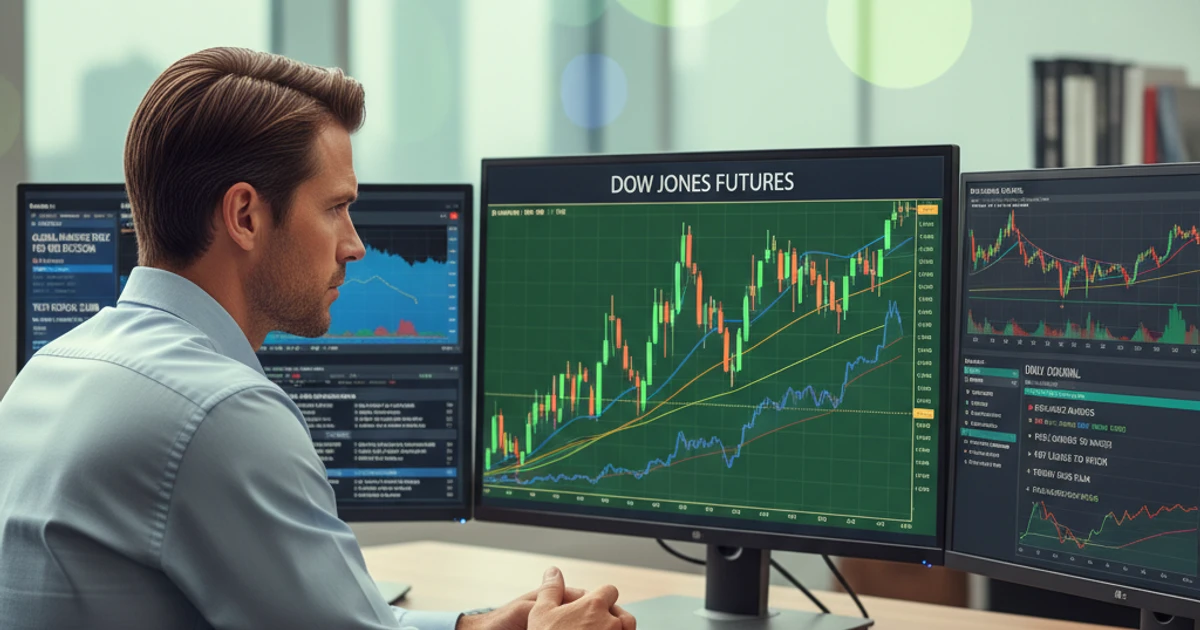
Building a Daily Routine Around Dow Jones Futures Today
Morning checklist: data, charts, and news to review in 10–15 minutes
A quick but focused morning scan can anchor your entire trading day. Before looking at individual stocks, spend a few minutes checking how equity derivatives are signaling risk sentiment for the U.S. session.
Start by comparing early Dow, S&P 500, and Nasdaq futures levels with the prior cash close. For example, if Dow contracts are down 150 points while the S&P 500 is flat, it may hint at pressure on industrials such as Caterpillar or 3M.
Then glance at overnight headlines, the economic calendar on sites like Investing.com, and key earnings, such as quarterly reports from JPMorgan or Apple. Pull up a simple 1‑hour chart to mark trend, support, and resistance so you are not surprised by volatility at the U.S. open.
Choosing reliable platforms and tools to track futures and financial news
A consistent routine depends on data you can trust. Many beginners use their broker’s basic quotes, but upgrading to stable platforms can significantly improve decision quality.
Real‑time futures quotes from CME-linked feeds on platforms like Interactive Brokers or Thinkorswim are usually more accurate than delayed charts. For news, combine apps such as Bloomberg, CNBC, or Moneycontrol with Google Finance watchlists for broad macro coverage.
Set price and event alerts for major U.S. releases like the nonfarm payrolls report or CPI, so your phone notifies you when futures spike 0.5% or more. This saves you from constantly staring at screens while still staying informed.
Combining technical levels with macro events in a simple trading plan
A basic daily plan can be built by marrying price zones with scheduled data. Begin by marking pre‑market highs/lows and obvious support near round numbers such as 38,000 or 39,000 on the Dow chart.
Then align those levels with the day’s events. For example, if the Federal Reserve announces its rate decision at 2 p.m. ET, plan separate scenarios for a hawkish surprise versus a dovish tone, including how you will react if futures break key support.
Write down your intended entries, stop‑loss levels, and profit targets before the bell. For instance, risking 50 points to aim for a 100‑point move helps avoid impulsive trades when volatility picks up after an economic release.
Journaling trades and market observations to improve over time
Documenting your actions turns each market day into a lesson. Instead of relying on memory, capture what you saw and how you responded.
For every trade, log the setup, entry, exit, and result in a spreadsheet or tools like Notion. Note whether index futures correctly anticipated the cash market; for example, record days when a 200‑point pre‑market drop reversed into a green close.
Review this journal weekly to spot patterns, such as consistently entering too early before major U.S. data. Over a few months, you will refine your routine, cut repeated mistakes, and build a process that fits your risk tolerance and schedule.
Reference: What's your actual morning routine before market open?
Conclusion: Turning Dow Jones Futures Insights into Smarter Decisions
Main takeaways from tracking Dow Jones futures today
Watching index futures before the opening bell helps you gauge early sentiment, but it should never be treated as a guaranteed forecast. For instance, on March 13, 2023, Dow futures were sharply lower pre-market after banking sector worries, yet the cash index finished the day nearly flat as dip buyers stepped in.
This is why context matters. Combining futures moves with macro data, earnings, and overseas market action creates a more reliable picture. A simple daily checklist—US jobs releases, results from companies like Apple or JPMorgan, and moves in the Nikkei and DAX—can turn random headlines into a structured, disciplined routine.
How Dow futures fit into a broader, long-term investing plan
Index derivatives work best as a timing and risk‑management tool around a long-term portfolio, not a replacement for it. A retirement investor with SIPs into S&P 500 and Nifty index funds, for example, can use weak futures as a chance to phase in lump sums instead of panicking out of positions.
The key is to keep core holdings aligned with multi‑year goals. Warren Buffett has repeatedly highlighted that short‑term index swings should not dictate long‑term ownership decisions. Avoid reshuffling your portfolio each time overnight futures move 0.5%—that noise rarely changes your 10‑year plan.
Balancing active futures trading with core portfolio investing
If you choose to trade actively, separate trading money from long-term wealth capital. A practical rule for beginners is to keep 80–90% in diversified funds or quality stocks, and use only 10–20%—or less—for tactical positions in contracts like the Dow or Nifty futures.
Set explicit limits, such as risking no more than 1% of total capital per trade and capping overall futures exposure. This protects your compounding engine so that a few bad leveraged trades cannot derail goals like funding a child’s education or early retirement.
Next steps: building a simple daily process with Vestmint’s guidance
Turning these ideas into habit requires a repeatable routine. A sample morning flow could be: check overnight index futures, scan economic calendars on sites like Investing.com, review key US and India earnings, then note your plan in a journal before markets open.
Vestmint’s structured education and tools can help you interpret these signals instead of reacting emotionally. By logging trades, outcomes, and lessons each week, you gradually refine your approach, turning raw futures data into calmer, smarter investing decisions over time.
FAQs: Dow Jones Futures Today, Stock Market Trends, and Trading Tips
How should a beginner start using Dow Jones futures today to plan trades?
New traders often feel pressure to act quickly when they see futures jump overnight. A safer first step is to simply watch the price action for a few weeks without trading. Track how the Dow contract reacts around 8:30 a.m. ET data releases like U.S. payrolls and how that tone carries into the 9:30 a.m. ET cash open.
Use these observations only to build a directional bias, then wait for confirmation on your charts. For example, if futures are up 200 points but the SPDR Dow Jones Industrial Average ETF (DIA) fails to break yesterday’s high, stand aside. Write a short plan that defines entries, exits, and position size before risking even $100.
Why do Dow futures sometimes move one way while the stock market opens another way?
Overnight prices often reflect headlines that arrive when U.S. exchanges are closed. Between 8:00 a.m. and 9:30 a.m. ET, new earnings guidance from companies like Apple or JPMorgan can flip sentiment, causing a strong pre-market rally in futures to fade before the bell.
At the open, large mutual funds and ETFs send market-on-open orders that can overwhelm thin overnight liquidity. Market makers may intentionally fade stretched overnight moves, turning a +150-point futures gain into a flat or even negative open as true institutional supply and demand appear.